
explore
Dwejra salt pans, Gozo: the sea salt and the wild coast
At Dwejra on Gozo's protected coast, sea salt forms in old rock pans by the Blue Hole. See the pans, the story, and where to buy real Maltese salt.
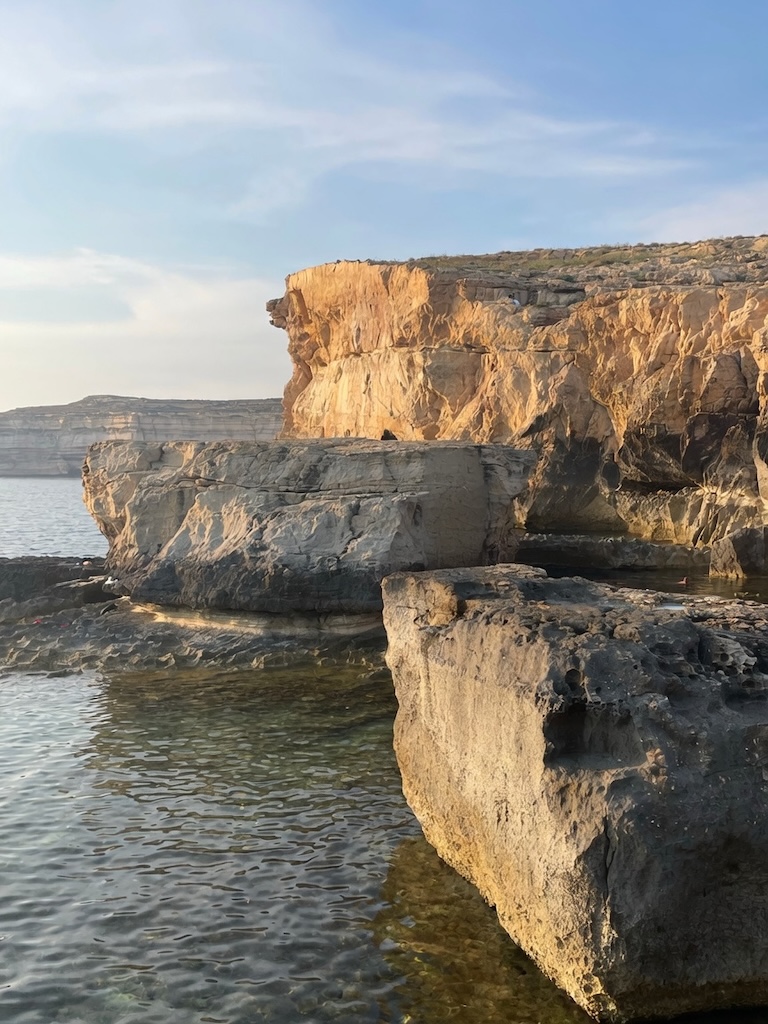
On the wild western tip of Gozo, at Dwejra, the coast is all drama: the Blue Hole, the sheltered Inland Sea, the off-limits islet of Fungus Rock, and the open water where the Azure Window once stood. Cut into the rock among all of it, easy to walk straight past, are old salt pans. In high summer they fill with glittering white sea salt — one of the quieter pleasures of a place better known for its geology. Here’s the story of the salt and the pans, what else there is to see, and, because Dwejra is a protected coast, how to enjoy it without leaving a mark.
Dwejra, in brief
- Where: Gozo’s west coast, past San Lawrenz village
- The draw: the Blue Hole, the Inland Sea, Fungus Rock, the site of the collapsed Azure Window — plus historic rock-cut salt pans
- The salt pans: no longer a business; historic pans cut into the rock, once used to help fund the nearby watchtower
- Protected: a Natura 2000 site, Malta’s largest continuous protected land-and-sea area, and a candidate UNESCO World Heritage Site — look, don’t take
- Salt souvenir: buy real Maltese sea salt from the working pans near Marsalforn rather than taking any here
- Bring / take care: sturdy shoes, hat, water, sun cream; no shade; keep back from the edge in rough seas
The salt pans, and their quiet history
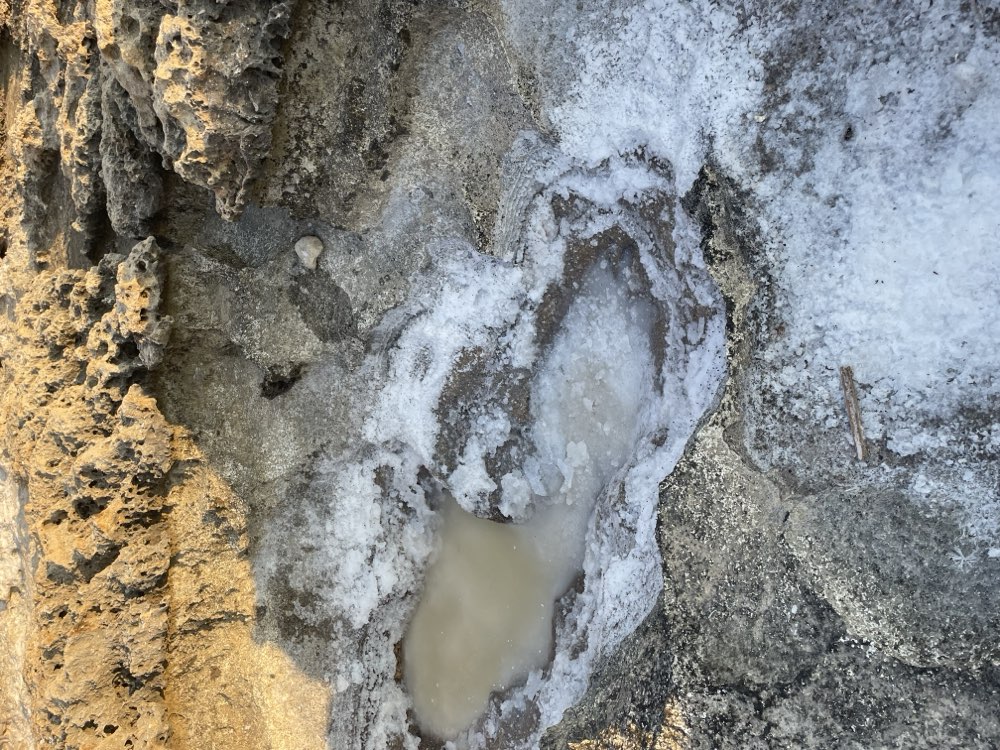
The pans everyone photographs on Gozo are the worked ones up on the north coast near Marsalforn, where families still harvest salt by hand. Dwejra’s are different: older, quieter, and no longer a business. They’re shallow squares cut straight into the coastal rock, and in the heat of summer the seawater caught in them evaporates and leaves salt behind. There’s a lovely detail to them: the pans near the Dwejra watchtower were once used to raise money to help pay for building the tower itself. Salt was valuable enough to fund a fortress. It’s why we get the word “salary,” from the Latin sal — salt — and why, under the Knights of St John, salt was a monopoly you couldn’t simply help yourself to.
The salt, up close
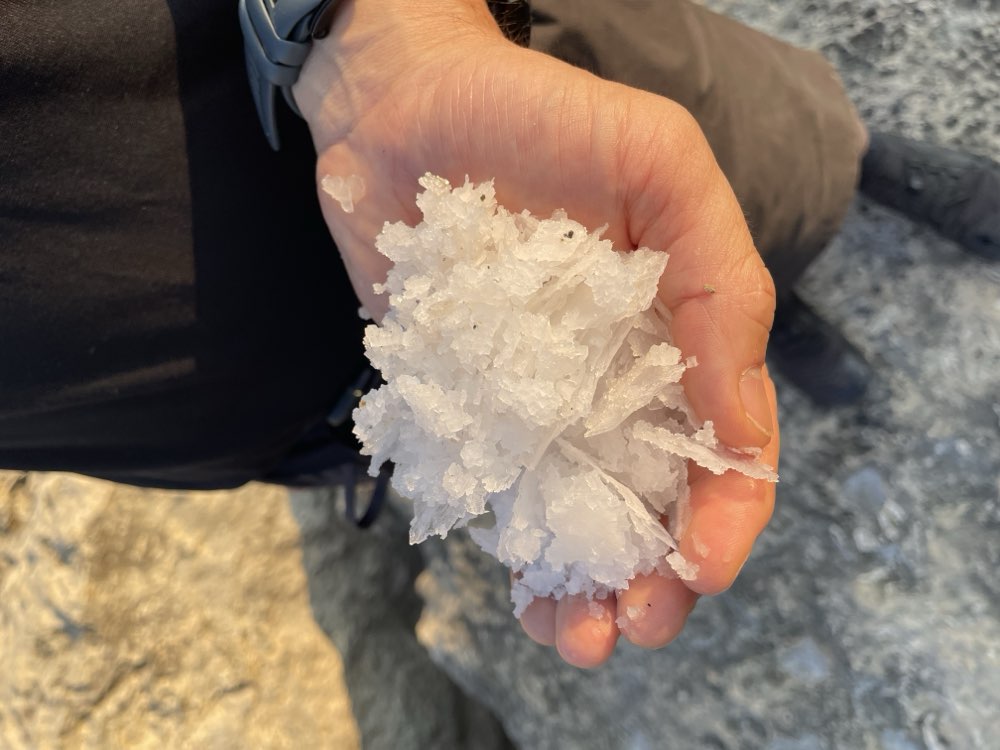
In the heat of summer, the seawater left in these old pans dries out and the salt gathers as clean white crystals — coarse, flaky and surprisingly beautiful. They sit loose on the rock and lift out easily in crystal form; I picked up a handful just to look at it, bright and clean with none of the harsh edge of table salt.
A word, though, because it matters. Dwejra is one of Malta’s most protected places — a Natura 2000 site, the island’s largest continuous protected land-and-sea area, and a candidate UNESCO World Heritage Site — and the rules here are being tightened to protect its geology and landscape, right down to restricting the taking of fossils. So enjoy the salt where it lies: look, photograph, but leave it as you find it. If you’d like some to take home, buy proper Maltese sea salt as a souvenir — the working pans near Marsalforn sell hand-harvested Gozo salt by the bag for only a few euros, and buying it supports the families who still make it.
What else is at Dwejra
The salt is a small, quiet pleasure in a place full of big ones.
The Blue Hole is a near-perfect circular pool in the rock shelf at the sea’s edge, dropping into a chimney that opens out to the open sea — one of the Mediterranean’s most famous dive and snorkel sites. If the clear water tempts you, here’s a starting point for diving in Malta. The Inland Sea is a calm, shallow lagoon joined to the Mediterranean by a natural tunnel through the cliff, with small boats running trips out through it. Fungus Rock is the flat-topped islet across the bay, closed off centuries ago by the Knights to protect a rare plant they prized; you view it from the shore. And Dwejra Bay itself is where the Azure Window stood until storms brought it down in March 2017 — the arch is gone, and what you see now is open sea where it used to be.
Getting there
From Malta, take the Gozo ferry from Ċirkewwa to Mġarr, then drive across the island and through San Lawrenz village to the Dwejra parking area. Gozo is far easier with a car — here’s whether you need one — though buses and the hop-on-hop-off do reach Dwejra. From the car park it’s a short walk over uneven, sometimes sharp rock, so wear proper shoes. There’s no shade at all.
When to go
Dwejra is worth a visit year-round, but the salt sits in the pans in the heat of high summer, and calm, clear days are best for the Blue Hole and the Inland Sea. Late afternoon into sunset is the loveliest light here — the low sun on the cliffs is superb — and it fits neatly at the end of a Gozo day after Victoria and lunch. For a proper meal, Victoria is about 20 minutes away; here’s where locals actually eat.
Frequently asked questions
Are there salt pans at Dwejra?
Yes. Among Dwejra's better-known sights — the Blue Hole, the Inland Sea and Fungus Rock — there are old rock-cut salt pans carved into the coast. They're historic rather than a working business today: the famous worked pans are up the north coast near Marsalforn. In high summer, seawater trapped in the Dwejra pans evaporates and leaves sea-salt crystals behind.
Can you take salt from the Dwejra salt pans?
Better not to. Dwejra is a Natura 2000 site — one of Malta's most protected areas — and the rules are being tightened to protect its geology and landscape, including restricting the taking of fossils. The salt lifts off the rock easily, but the responsible thing is to look and photograph and leave it as you find it. For salt to take home, buy a bag of real Maltese sea salt instead.
Where can you buy real Maltese sea salt?
From the working salt pans on Gozo's north coast near Marsalforn, where families still harvest it by hand and sell it from a little cave shop by the road — bags cost only a few euros. It's the best souvenir you can get here: the genuine hand-made article, and buying it directly supports the families keeping a centuries-old tradition alive.
What happened to the Azure Window?
Gozo's famous limestone arch at Dwejra collapsed into the sea on 8 March 2017, after days of severe storms. It no longer exists — you can't see it. What remains is open water where the arch once stood, and the site is now used by divers.
How do you get to Dwejra?
Cross from Malta on the Ċirkewwa–Mġarr ferry, then drive through San Lawrenz to the Dwejra car park; buses and the hop-on-hop-off also stop there. It's free to visit. From the parking it's a short walk over uneven rock, so wear sturdy shoes and bring sun protection — there's no shade.